Geospatial Mapping
Comprehensive topographical mapping and GIS data for land management. Efficiently capture clear and truthful imagery—the foundation of every accurate site model—at any scale, with resolution optimised for your requirements.
Precision mapping for large-scale assets
Site management demands more than a visual overview; it requires georeferenced data you can actually trust. We scale our mapping to the project—from expansive 350-acre quarries and landfill sites to individual development plots.
By using RTK/PPK and GCP workflows, we provide the high-accuracy spatial foundations needed for engineering, planning, and long-term monitoring.
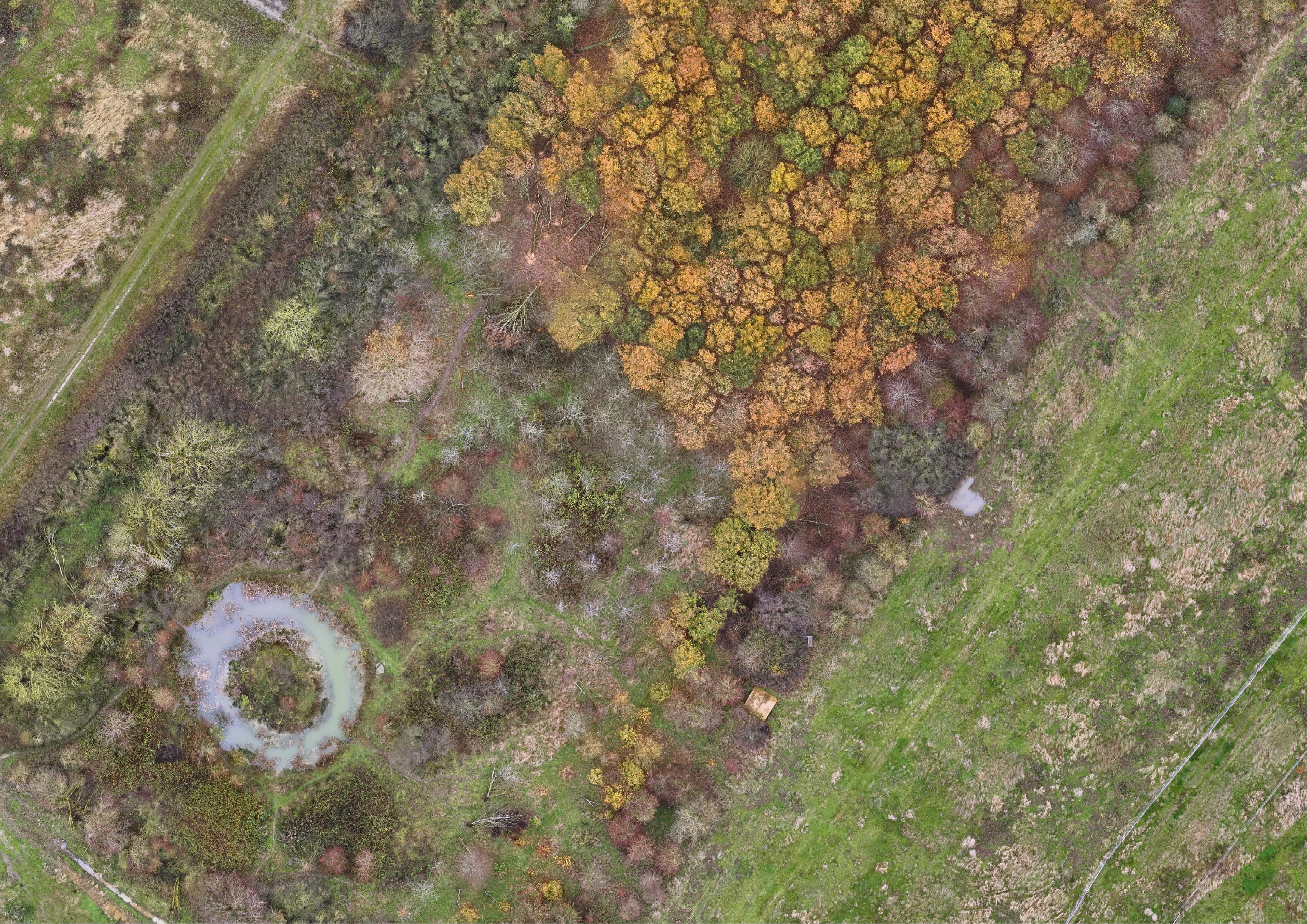
Geospatial Continuity: Seamlessly stitch hundreds of hectares into a single, high-resolution dataset. The imagery shown here is not a landscape photograph, but one of the 5,400 georeferenced photographs used to generate a survey-grade orthomosaic.
Planimetric Precision: Transform raw aerial data into survey-grade datasets through rigorous orthorectification. By correcting for lens distortion and topographic relief, we ensure a uniform scale that allows for precise distance and area measurements across the entire asset.
Bespoke Analytical Detail: Standard maps often miss the nuances of a complex site. We provide tailored datasets that can be configured to highlight the specific analytical details required for your project, ensuring the visual intelligence we deliver fits your exact technical workflow.
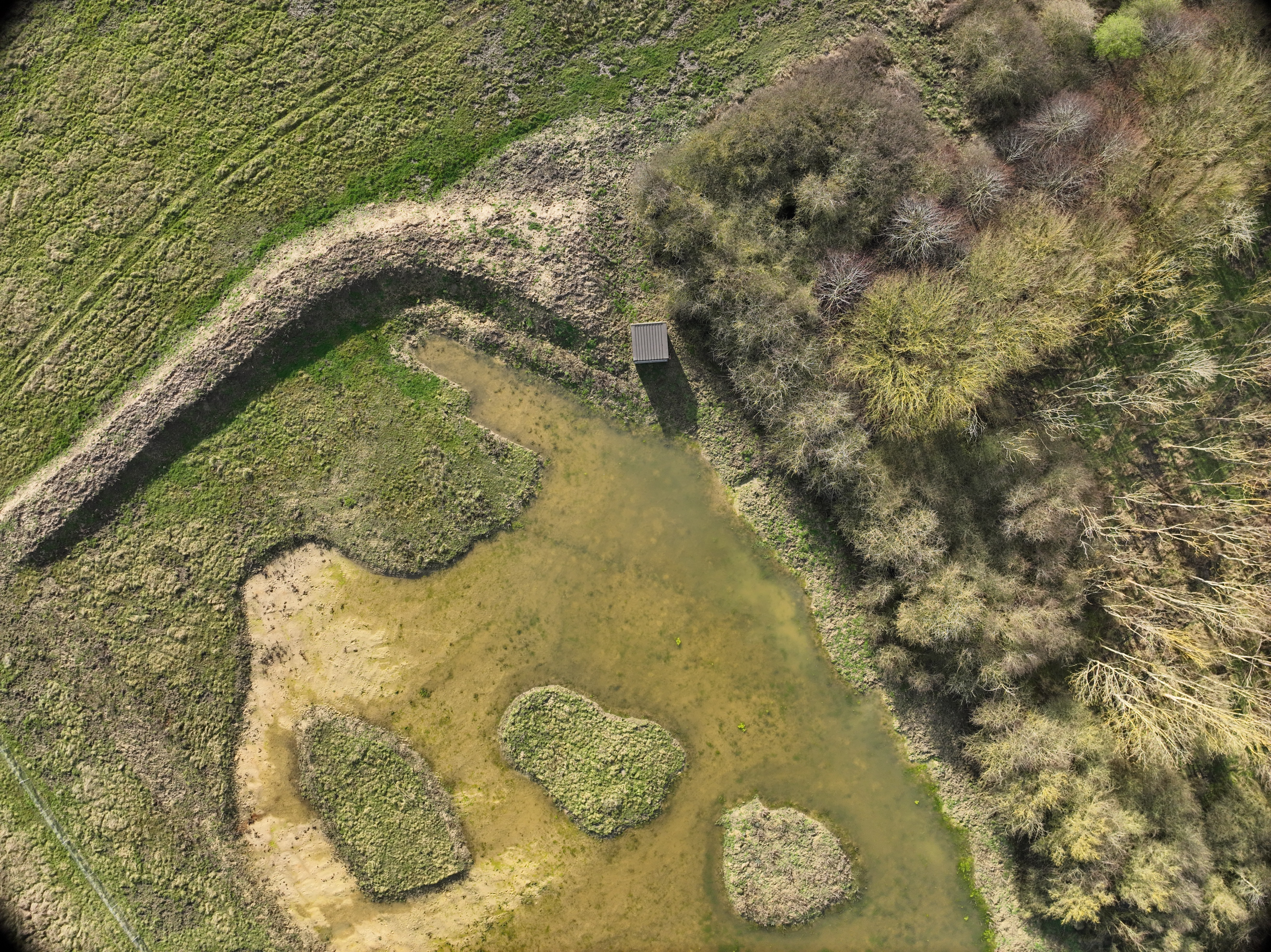
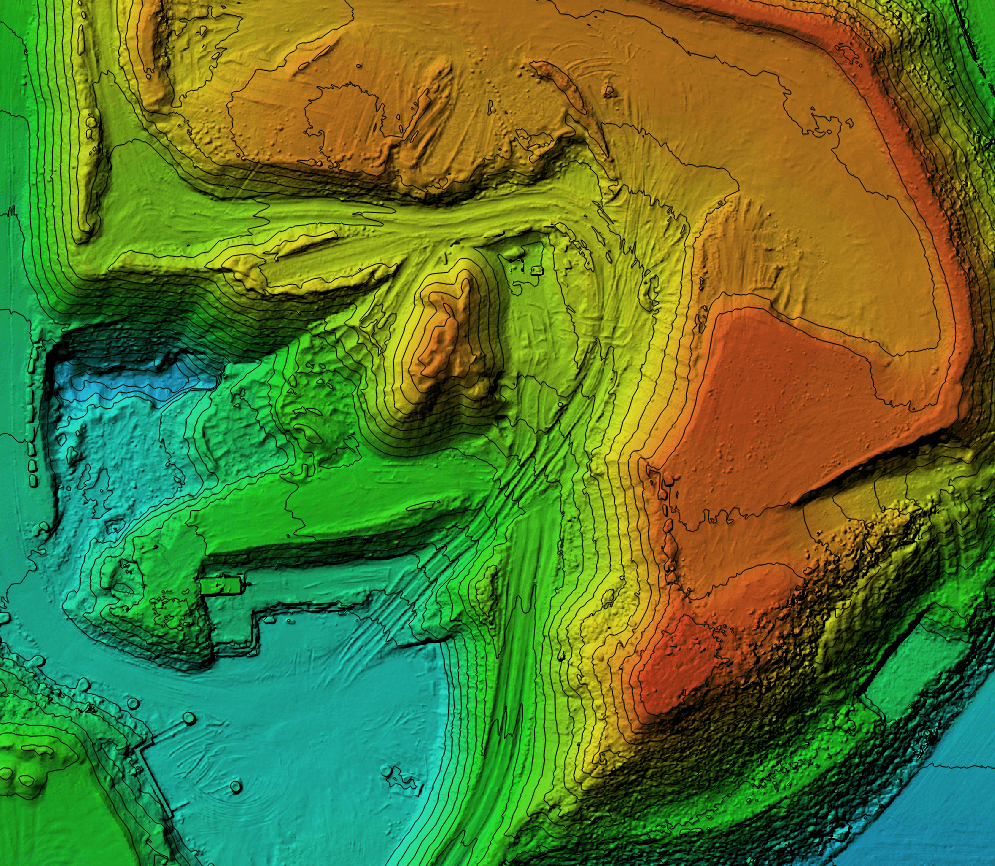
Capture the underlying geometry of the site to generate high-density point clouds. We provide the essential elevation benchmarks and contour data required for infrastructure design and professional site planning.
Precision Contouring: Generate measured contours and elevation benchmarks tied to project-specific coordinate systems. This provides the 'Digital Skeleton' required for volumetric change detection and multi-year site planning.
High-Density Point Clouds: Acquire millions of georeferenced data points per hectare, creating a 3D digital skeleton of the site for use in engineering and architectural workflows.
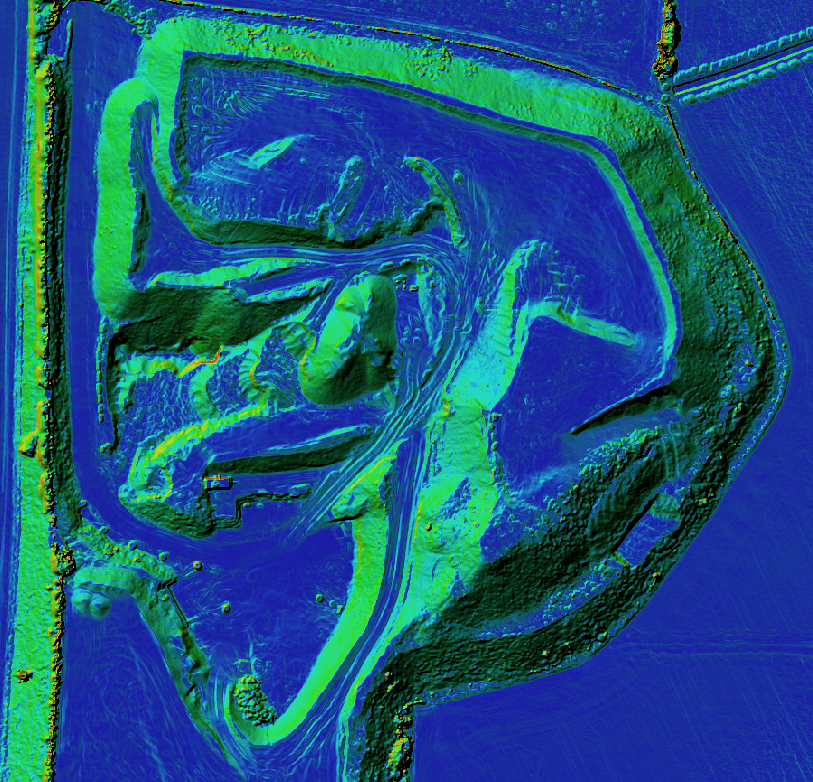
Beyond the visual, we generate Digital Surface (DSM) and Digital Terrain Models (DTM) to reveal the "Bare Earth" topography. By converting elevation data into a Slope Gradient Analysis, we can provide a technical audit of site geometry:
Hydrological Management: Low-gradient, flat operational areas—identified here in navy and cyan—reveal exactly where drainage may stall. Mapping these 'zero-slope' regions is critical for designing effective runoff diversions and preventing water-pooling across the site.
Infrastructure & Safety: High-inclination gradients, highlighted here in vibrant green, clearly define the crests of stockpiles, haul road embankments, and steep faces. This allows for remote monitoring of slope stability and edge-detection without putting personnel at risk.
Operational Planning: By identifying consistent gradients, we help site managers plan machinery transit routes and optimize stockpile placement based on the natural angle of repose of the material.
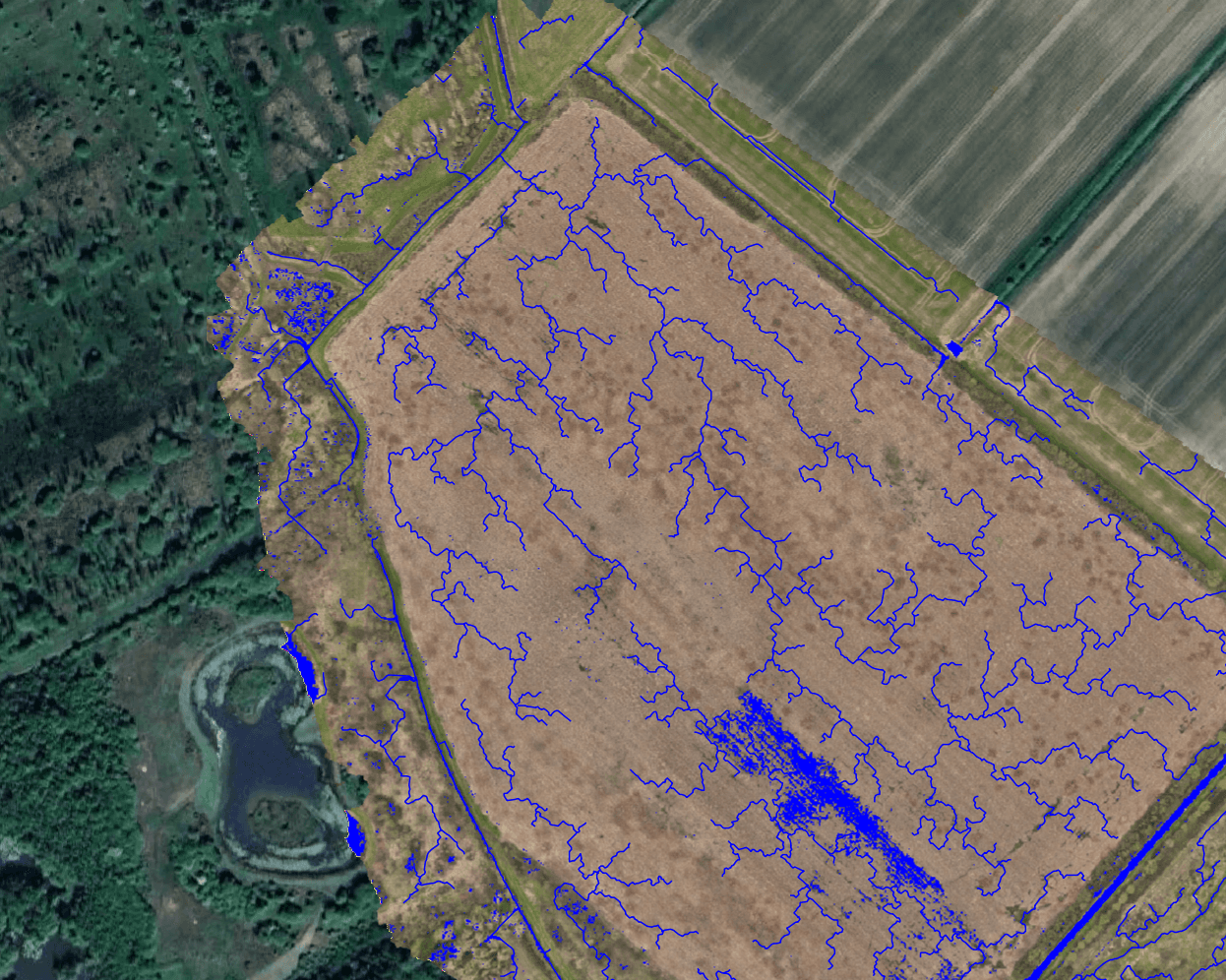
We don't just deliver raw data; we extract meaning from it. Using QGIS, we perform complex spatial analysis—including hydrological catchment modelling, slope/terrain analysis, and temporal change detection—providing you with a finished report rather than just a file.
Hydrology: Identify pooling areas and runoff patterns—critical for large-scale rewilding initiatives and complex construction site planning.
Software Interoperability: Full compatibility with ArcGIS, QGIS, and AutoCAD. We deliver data in native formats (DWG, DXF, SHP) for seamless integration into your existing workflows.
Technical Deliverables
High-Resolution Orthomosaics (.GeoTIFF / .ECW)
Digital Surface & Terrain Models (.TIF / .ASC)
Topographical Contour Mapping (.DXF / .DWG)
GIS Shapefiles (.SHP)
You May Also Like